 English
 中文简体
中文简体
 عربى
عربى
Industry News
Home / News / Industry News / What Is Acrylic Fabric? Properties, Production, Uses, and Key Buyer Checks
 By Admin
Content
Acrylic fiber accounts for roughly two percent of global textile fiber production, yet it turns up in sweaters, fleece, blankets, awnings, boat covers, and blended upholstery yarns sold in almost every market. Buyers usually meet it on a specification sheet rather than in a showroom, printed as 100% acrylic, 70/30 acrylic-wool, or acrylic chenille. This guide covers what the fiber is, how it is produced, where it performs, and where it quietly fails.
Acrylic fabric is a textile made from acrylic fiber, a synthetic polymer in which at least 85 percent of the fiber-forming substance is acrylonitrile.
Definition: acrylic fiber is a manufactured staple fiber formed from polyacrylonitrile, containing at least 85 percent acrylonitrile by weight. Fibers holding 35 to 85 percent acrylonitrile are classified as modacrylic.
That 85 percent figure is the technical line between acrylic and its flame-resistant sibling. The polymer itself is built from acrylonitrile monomers and spun into crimped staple, which is why the finished cloth behaves like wool in the hand but very differently when it meets water.
The wool comparison is not marketing language. It comes from three structural choices:
Acrylic was commercialized in the early 1950s as a lower-cost, moth-resistant alternative to wool. Its modern roles are broader: fake fur, high-bulk sweater yarn, solution-dyed outdoor fabric, and a blending partner for wool, cotton, and polyester.
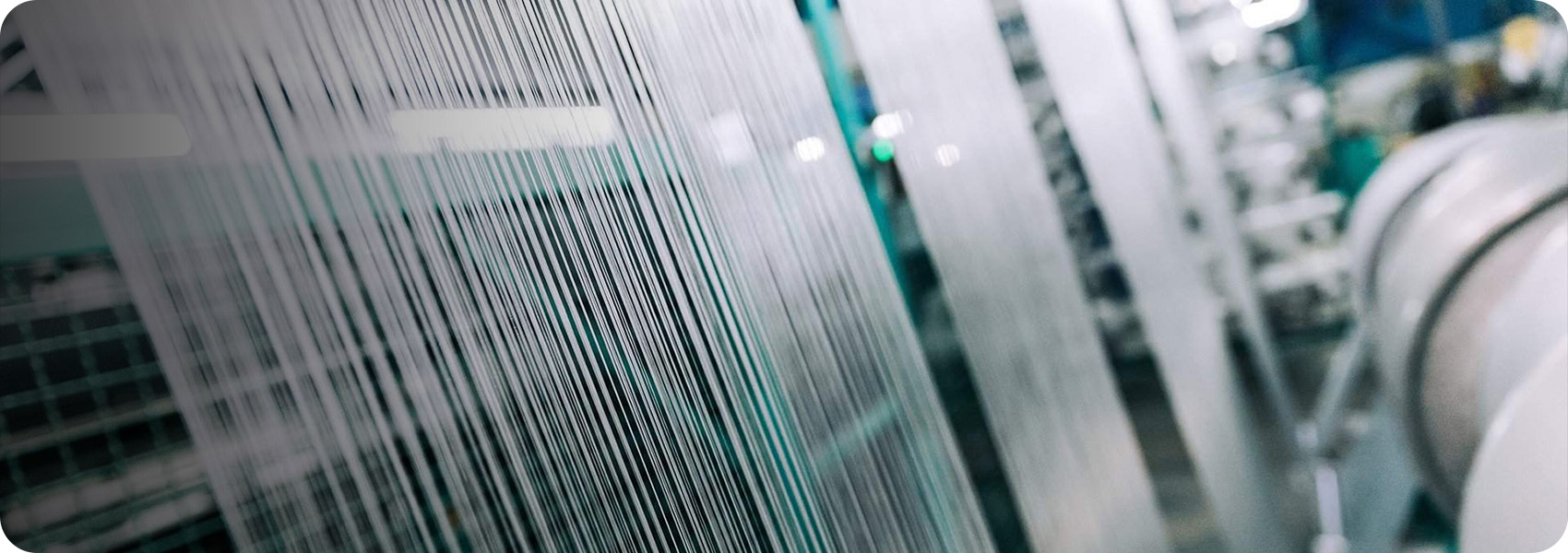
Acrylic fiber is made by polymerizing acrylonitrile into polyacrylonitrile, dissolving the polymer into a spinning dope, and extruding it into filaments through wet or dry spinning.
Monomer supply
Acrylonitrile is produced by reacting propylene with ammonia and oxygen. The feedstock is fossil-derived, which is the main reason recycled acrylic remains rare.
Polymerization
Acrylonitrile is copolymerized with small amounts of vinyl acetate or methyl acrylate in a solvent such as DMF or aqueous sodium thiocyanate. The comonomer choice sets softness and dyeability.
Spinning and drawing
The dope is extruded into filaments, either wet spun into a coagulation bath or dry spun with hot gas. Filaments are drawn three to ten times their length for strength, then washed, crimped, dried, and cut into 32 to 100 mm staple.
Yarn and fabric
Staple is spun into yarn, often blended, then knitted or woven. Color is added either in the polymer dope or later at stock, yarn, or piece dyeing.
Dope dyeing deserves attention before quoting. Pigment is added to the polymer solution before the fiber exists, so color sits inside the filament rather than on its surface. That is why solution-dyed acrylic outdoor fabric holds color for years. The same logic of engineering a synthetic to imitate a natural hand sits behind our polyester imitation linen fabric, where textured polyester yarn reproduces the dry touch of linen.
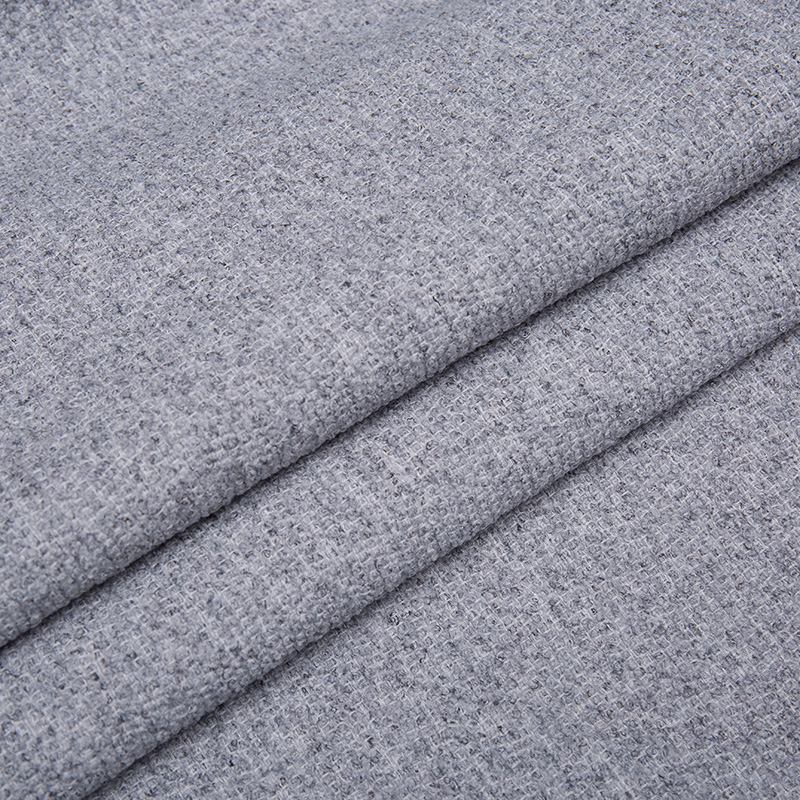 Polyester Imitation Linen Fabric for Sofa Upholstery and CurtainsA synthetic alternative to natural linen, this polyester fabric offers dry touch, durability, and easy-care upholstery for sofas and curtains.View Product →
Acrylic is warm, light, quick-drying, and highly resistant to sunlight, but it has only moderate abrasion resistance and a strong tendency to pill and hold static.
| Property | Typical value | Practical effect |
| Moisture regain | 1.5-2.5% | Dries quickly and feels dry, but generates static |
| Softening range | 230-250 C | Heat setting is possible; a hot home iron can melt the surface |
| Abrasion resistance | Moderate | Suits apparel and light upholstery, not contract seating |
| Pilling tendency | High | Short staple sheds fibers; tight spins and blends help |
| Moth and mildew | Excellent | Stores well in humid climates with no protein to feed moths |
| Light and UV | Good to excellent | Solution-dyed acrylic keeps color on awnings and cushions |
| Flammability | Burns and melts | Modacrylic is the self-extinguishing version of the family |
Acrylic is a family of fibers rather than a single material: acrylonitrile content, comonomers, dyeing route, and bulk level all change how a fabric behaves in use.
Sourcing note: modacrylic is often listed simply as acrylic on marketing pages, but flame standards apply to the modacrylic composition only. Request the fiber content certificate before accepting any FR claim.
Acrylic's strongest markets are apparel, home textiles, and outdoor or technical fabrics, where sunlight and moisture matter more than heavy rubbing.
Sweaters, fleece, socks, hats, gloves, fake fur, and linings. It is blended with wool to cut cost and add moth resistance.
Blankets, throws, area rugs, cushions, and upholstery yarns where loft and a wool-like touch are the design goal.
Awnings, marine covers, outdoor furniture fabric, tents, and modacrylic protective clothing.
Upholstery is the grey area. Acrylic appears in chenille and boucle yarns because it adds volume and softness at a lower cost than wool, but many acrylic-rich seating constructions sit in the 15,000 to 25,000 Martindale double-rub band, which suits light residential use and fails contract seating. Our chenille fabric range shows how the same loft and drape can be built on fiber blends chosen for abrasion rather than price alone.
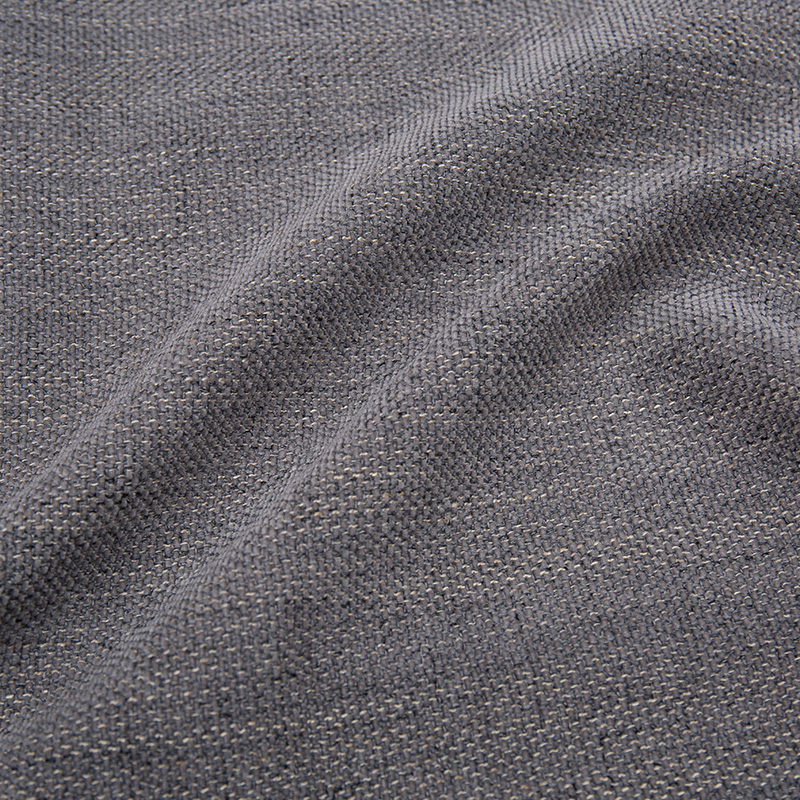 Chenille Fabric for Sofa Upholstery, Home Decor, and Custom ProjectsSoft, warm, breathable chenille made with wrapped pile yarns; view for durable, customizable sofa upholstery and luxury home decor.View Product →
Acrylic sits between wool and polyester: warmer and softer in hand than polyester, cheaper and far less absorbent than wool, and less abrasion-resistant than either for heavy wear.
| Fiber | Moisture regain | Warmth per weight | Abrasion | Pilling | UV resistance | Common use |
| Acrylic | 1.5-2.5% | High | Moderate | High | Excellent | Sweaters, blankets, outdoor fabric |
| Wool | 13-16% | High | Good | Moderate | Poor to moderate | Suiting, upholstery, carpet |
| Polyester | 0.4-0.8% | Moderate | High | Moderate | Good | Upholstery, apparel, blends |
| Cotton | 7-8.5% | Low | Moderate to good | Low to moderate | Poor | Apparel, bedding, towels |
A practical rule: specify acrylic where sunlight, moisture, and weight matter, and specify polyester or a polyester blend where rubbing, flexing, and repeated cleaning matter.
When two qualities are quoted at similar prices, the difference is usually fiber blend rather than weave. Our guide to fibers and blends in textiles explains the specification language that separates a genuinely durable construction from a well-photographed one.
If your blend comparison spans several qualities, the fiber and blend guide walks through the terms suppliers use.
Acrylic survives washing well but is damaged by heat, so the care rules are mostly about temperature and mechanical action.
Quality check: a pilling grade of 4 or better on a 1 to 5 scale, plus shrinkage under 3 percent after three home washes, are reasonable acceptance criteria for acrylic-rich apparel and home textiles.
Raised surfaces change the picture, because brushing lifts fibers and makes pilling more visible under repeated rubbing. Brushed and raised constructions need a tighter staple and a tested pilling result before they are approved for seating or heavy-use apparel. Our brushed fabric range is built with that testing step in mind.
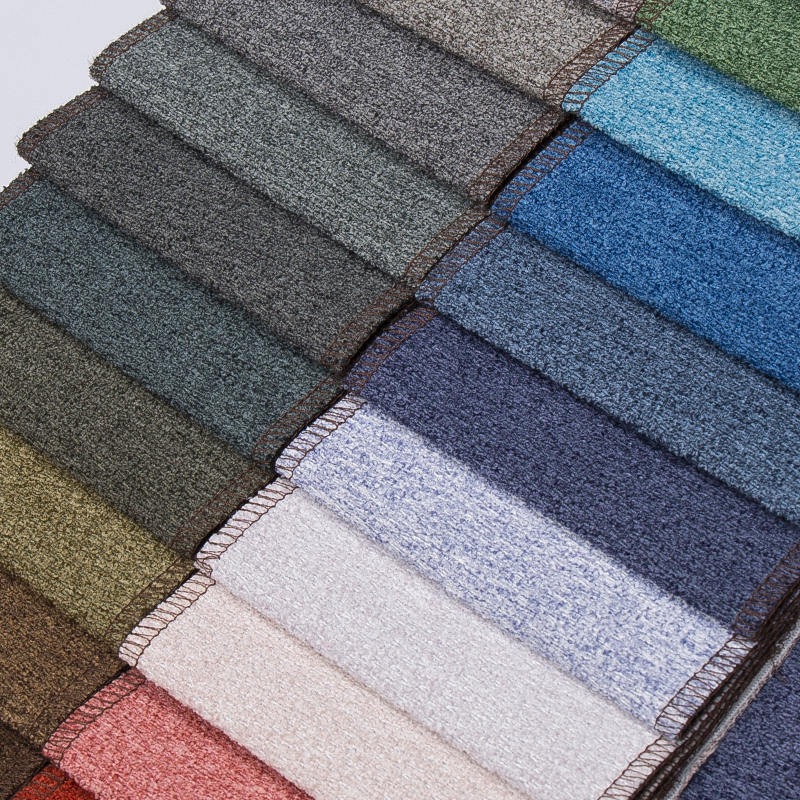 Brushed Fabric for Sofa Upholstery with Soft, Warm SurfaceA brushed sofa fabric with wool-like softness, warmth, breathability, and resistance to shedding; available for wholesale or custom upholstery.View Product →
Before placing an order, ask for fiber content tolerance (plus or minus three percentage points is common), Martindale results, lightfastness hours, and the dyeing route. Solution-dyed fabric should never be quoted against piece-dyed goods without that note. To discuss a specific construction, send your specification to our team.
Yes. Its crimped structure traps air and its density of about 1.17 g/cm3 is lower than wool's 1.31, so warmth arrives at a lighter weight. It does not absorb moisture the way wool does, so it can feel clammy in humid heat.
More than most fibers. Short staple, low tenacity, and high static push loose fibers to the surface. Tighter spin counts, blends with polyester or wool, and washing inside out in a mesh bag reduce the problem without removing it.
Solution-dyed acrylic is one of the better outdoor choices because it resists UV degradation and moisture without a finish. Awnings, marine covers, and outdoor cushions made from it typically hold color for years, while piece-dyed versions fade much faster.
Not especially. It is made from fossil feedstock, is not biodegradable, and sheds microfibers during washing. Solution dyeing cuts water and dye use, and small volumes of recycled acrylic exist. Longer service life and correct care remain the most reliable ways to lower its impact.
Acrylic earns its place when warmth, low weight, and light stability matter more than abrasion. Read the fiber content before the label, test pilling and rubbing rather than trusting the hand feel, and the fiber will do exactly what a specification sheet promises.

From yarn to fabric. At Xiangyi, we stitch quality into every seam, crafting sofa fabric that goes beyond decor—it embodies your home’s unique style.
PRODUCT

+86-18262539999(Meng Lin)