 English
 中文简体
中文简体
 عربى
عربى
Industry News
Home / News / Industry News / Railroaded Meaning: Unfair Slang vs Fabric Pattern Direction Explained
 By Admin
Content
You are reading a sofa fabric spec sheet, and one line says Pattern Direction: Railroaded. You search the term and get politics, court rulings, and nineteenth-century railway monopolies. The same word is doing two completely different jobs at once, and picking the wrong one costs you a cut order.
Buyers run into this collision more often than they expect, because the fabric sense of railroaded survives almost entirely inside upholstery specs, drapery workroom notes, and cutting tickets. This guide separates the two meanings, then shows where the fabric definition changes real purchasing decisions.
Railroaded carries two standard meanings: in everyday English it means forced through quickly and unfairly, and in textiles it means a pattern laid across the width of the fabric from selvage to selvage.
Railroaded, adjective. One: forced to happen, or forced upon someone, especially quickly or without fair process. Two: of a fabric pattern, oriented horizontally so the design repeats across the full width of the goods, from one selvage to the other, instead of up the length of the piece.
Both senses trace back to the same nineteenth-century source. Railroad companies moved fast and moved through whatever stood in their way, whether that was a landowner, a legislature, or a court. The verb railroad has meant to push something through by pressure ever since, and the textile trade borrowed the same image of something running along the rails.
Context almost always tells you which sense is in play. A news article, a court filing, or a workplace complaint uses the pressure sense. A spec sheet, a cutting ticket, or an email from a mill uses the textile sense.
The everyday sense
A decision forced through quickly or unfairly, with little regard for the people it affects.
Appears in news reporting, legal writing, labor disputes, and internal complaints.
The textile sense
A pattern oriented across the width of the goods, repeating selvage to selvage.
Appears in upholstery specifications, drapery workrooms, and cutting tickets.
In ordinary usage, being railroaded means a decision was forced through before the people affected had a real chance to object.
Cambridge defines it as forcing something to happen or forcing someone to do something, especially quickly or unfairly, and offers the example sentence We were railroaded into signing the agreement. That example captures the pattern well.
The complaint behind railroaded is not speed. It is that the decision was settled before the people affected were heard.
The word is not a synonym for fast. A decision can be made quickly and still be fair. Railroaded adds the element of process skipped, and that distinction matters when the term appears in a formal complaint, a performance review, or a legal filing.
In textile usage, railroaded describes a fabric whose pattern repeats across the width of the goods, running from one selvage to the other, rather than up the length of the piece.
Selvage is the finished edge running along the two sides of a woven fabric. The distance between those edges is the width, or usable face, of the goods. When a pattern is railroaded, the design repeat is engineered to fill that width, and the fabric is cut and applied so the motif travels horizontally across the piece.
Practical shortcut: if a pattern is railroaded, the width of the roll behaves like the height of the pattern. Rotate your cutting plan, and a 54-inch roll can cover a 54-inch drop across a chair back.
This orientation is why railroaded construction is standard in upholstery and drapery rather than a specialty finish. Furniture panels tend to be wider than they are tall, and rolls are wide relative to the panel heights most orders need. For anyone who wants the underlying vocabulary, it helps to read what counts as a textile and how it differs from fabric, because suppliers mix the two terms on the same spec sheet.
One warning: railroaded is an orientation description, not a quality claim. A railroaded fabric is not stronger or weaker than the same fabric run up the roll. The difference is entirely about direction, repeat placement, and how the goods get cut.
Pattern direction changes how much fabric a sofa consumes, where the seams fall, and how the finished piece wears over time.
On a plain, non-directional fabric, orientation barely matters. On a chenille or a jacquard with a clear directional repeat, it decides the marker. The table below sets out the differences that show up on real orders.
| Variable | Railroaded, across the width | Up the roll, along the length |
| Pattern travel | Selvage to selvage | Head of the piece to the tail |
| Roll width becomes | The effective repeat height | The usable pattern width |
| Typical cutting approach | Panels rotated to align with the width | Panels laid along the length |
| Seam direction | Horizontal seams across panels | Vertical seams down panels |
| Yardage behavior | Often lower on solid and small repeats | Often higher on large or centered motifs |
| Main risk | Mixing directions inside one order | Ignoring the repeat when planning the marker |
The risk in the last row is the one that hurts. If half a cut order arrives railroaded and half does not, the two halves reflect light differently, wear differently, and align differently at the seams. That mismatch usually shows up after the furniture is assembled, when returning the fabric is no longer practical.
 Jacquard Fabric Category for Apparel, Upholstery, and Home TextilesReview this jacquard category for woven relief patterns and durable apparel or upholstery use, where directional pattern alignment can affect results.View Product →
Railroaded construction is most common on fabrics with a strong directional pattern, including chenille, cut pile, jacquard, and polyester imitation linen.
For a fuller treatment of one of these, the guide to what chenille fabric is and how it behaves covers fiber, construction, and care in detail.
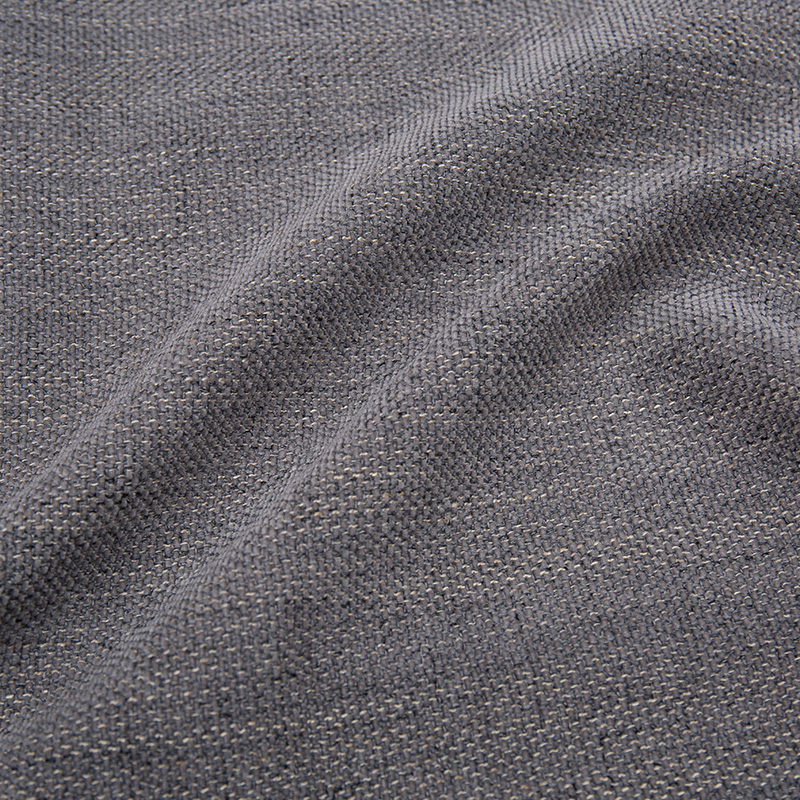 Chenille Upholstery Fabric for Sofas, Chairs, and Home DecorSoft, durable chenille upholstery category for sofas, chairs, and interior accents; check pattern direction and care guidance before specifying.View Product →
Confirm pattern direction from three sources before you release a purchase order: the written specification, a physical sample marked with its selvage, and a marker test using your largest cut piece.
That last step matters more than it sounds. Mills substitute bases and reweave lots, and a replacement roll that matches the color can still arrive running the other way. Written direction on the order is the cheapest protection available.
Only in the everyday sense. Used about a decision or a person, it signals unfair pressure. Used about a fabric, it is neutral and simply describes pattern orientation across the width.
Not by itself. The fabric is priced the same way regardless of orientation. What changes is the yardage your marker consumes, and that is where any cost difference shows up on a cutting order.
Technically yes, but only if you accept a rotated pattern and the different light reflection that comes with it. On a directional pile or a woven motif, the mismatch stays visible in the finished piece.
Use the mill's own vocabulary: railroaded, across the width, or selvage to selvage for horizontal, and up the roll or along the length for vertical. Attach a marked swatch if the order is large enough to justify it.

From yarn to fabric. At Xiangyi, we stitch quality into every seam, crafting sofa fabric that goes beyond decor—it embodies your home’s unique style.
PRODUCT

+86-18262539999(Meng Lin)