 English
 中文简体
 عربى
Industry News
Home / News / Industry News / What Is Bouclé? Loop Yarn Structure, Fabric Texture and Upholstery Buying Basics
 By Admin
Content
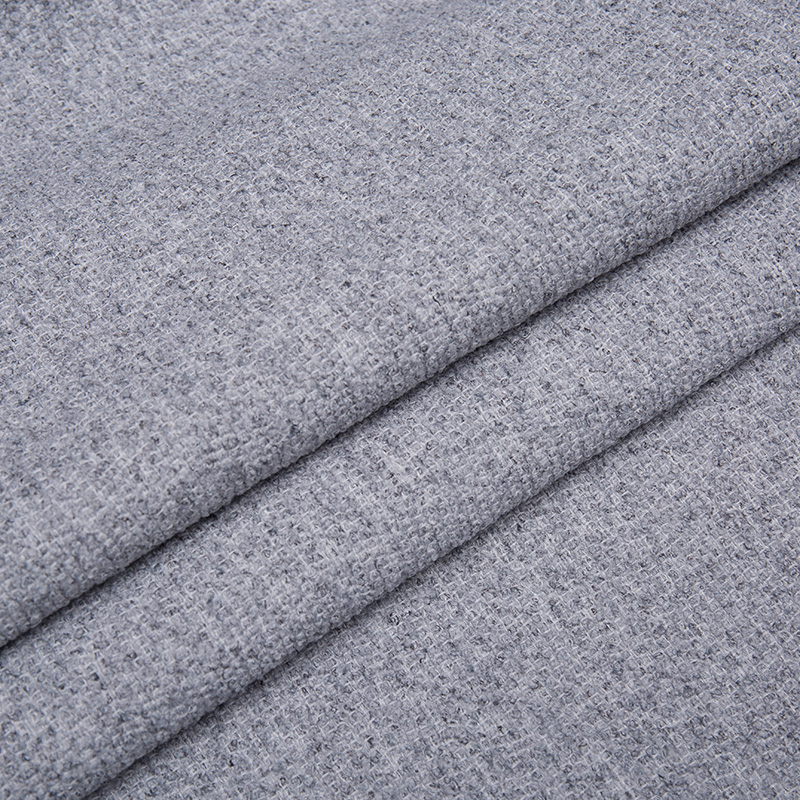
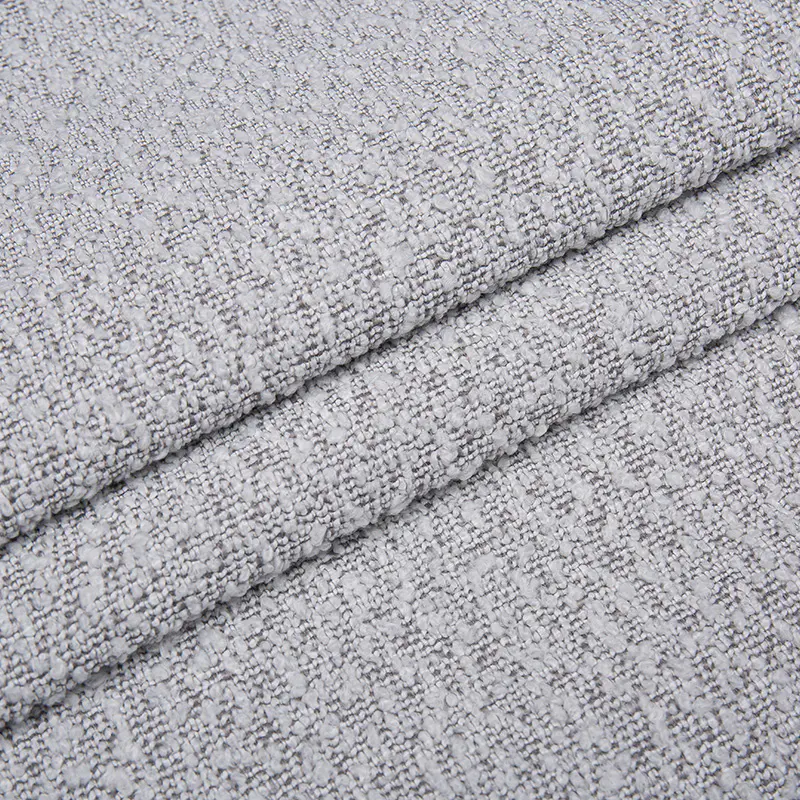
Run a hand across a cream bouclé sofa and two things register at once: the surface is soft, and it is not smooth. Small loops and curls catch under your fingers, scatter light unevenly, and leave a faint track where your palm passed. That looped surface is the whole identity of the cloth, and it is also why bouclé behaves differently from velvet, linen or a flat weave once it has to survive a family room, a contract lobby or a winter coat.
Bouclé definition: bouclé is a looped or curled novelty yarn, and bouclé fabric is the woven or knitted cloth built from it. The loops are deliberately left uncut on the surface, which produces the knotted, nubby hand that the French verb boucler, meaning to curl or loop, describes.
Strictly speaking the word belongs to the yarn first. A mill can buy bouclé yarn and weave it into a plain-ground cloth, or knit it into a sweater; what makes the result bouclé is the loop, not the fiber, the color or the price. That distinction matters when you read a specification sheet, because the name tells you how the surface is constructed, not what it is made of.
A bouclé yarn is built from at least two strands: a ground ply that carries the tensile load and an effect ply that is over-fed so it curls back on itself into loops.
The loop is created mechanically, not chemically. On a novelty twisting frame the effect yarn is fed faster than the ground yarn, and the speed difference decides whether the result is a tight bead-like curl or a loose open loop the width of a fingernail. Wool and mohair give the springiest loops; cotton reads drier and flatter; polyester and acrylic hold the shape cheaply but tend to fuzz with use.
In everyday trade usage the word slides between yarn and cloth, and both readings are correct. A supplier quoting bouclé fabric is describing a surface structure rather than a fiber content, which is why two qualities with the same name can feel like completely different products.
Ask a mill for bouclé and then ask which ply creates the loop and how tall it stands. Loop height, not fiber content, is what separates a refined upholstery quality from a loose decorative one.
Bouclé fabric is made by locking looped yarn into a ground structure and then finishing it so the loops hold their shape under load.
Because loop consistency begins at the yarn stage, a mill that controls twisting and weaving in one place holds a tighter tolerance than a trader buying finished rolls, which is the reason yarn development stays inside our manufacturing chain rather than being outsourced roll by roll.
Two rolls from the same dye lot can still read differently under showroom lighting. Loops scatter light in every direction, so a bouclé sofa shifts tone as you walk past it.
The line between bouclé and its closest cousins comes down to one question: what happens to the loop. Bouclé keeps it, cut pile shears it, velvet piles it densely on a warp ground, and a flat weave never forms it at all.
| Construction | Loop state | Hand feel | Snag risk |
| Bouclé | Loops left intact | Nubby, dry, springy | High |
| Velvet | Dense short cut pile | Smooth, directional | Low to medium |
| Cut pile | Loops sheared flat | Plush, even | Low to medium |
| Flat weave | No pile at all | Crisp, matte | Low |
Velvet is the closest visual relative and the furthest in behavior; the pile structure behind that sheen explains why it brushes one way and marks when you reverse it, while bouclé stays matte and directionless across the panel.
Loop height is the single specification that predicts how a bouclé sofa will age. Everything else, from fiber to color to backing, is secondary.
Where a project needs the softness without the open loop, cut pile fabric is the usual swap, because the pile is sheared after weaving and the surface stays plush without anything to catch.
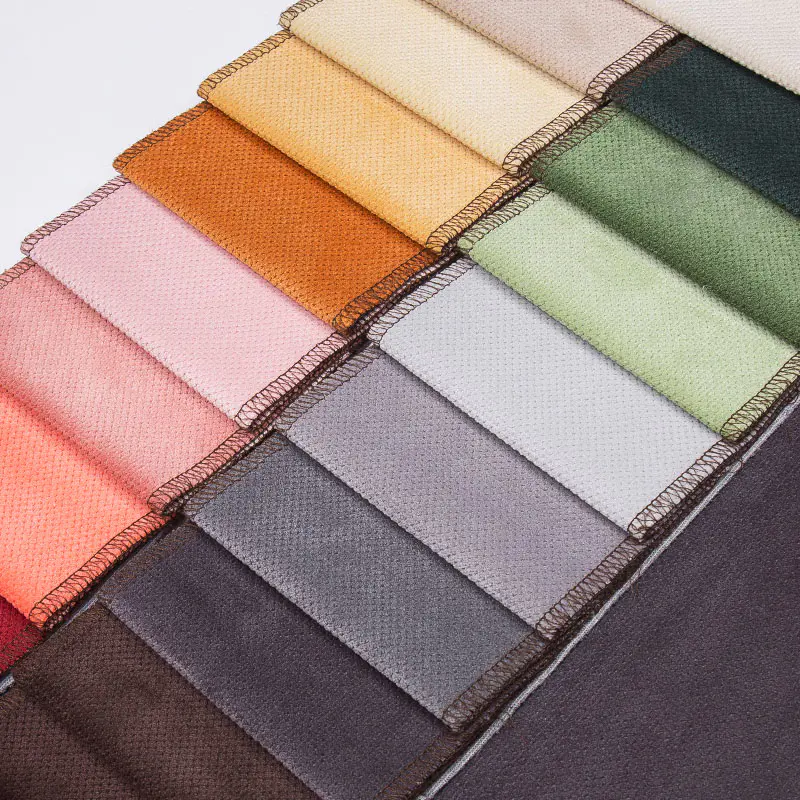 Cut Pile Sofa Upholstery Fabric for Wholesale SupplySheared cut pile gives a plush, velvety surface for sofa upholstery and apparel, with custom yarn and finishing options for wholesale projects.View Product →
Bouclé rarely fails from abrasion; it fails from snagging, surface fuzz and cleaning mistakes, and those three problems are what buyers actually complain about eighteen months in.
Abrasion figures still matter as a floor. Residential bouclé upholstery usually lands between 15,000 and 30,000 double rubs on the Wyzenbeek scale, which is respectable for a living room and well short of what a hotel lobby demands. What that number never captures is loop exposure. A 25,000-rub bouclé with tall loops can look tired before a 15,000-rub flat weave does, because the damage arrives through pulling rather than rubbing.
Care is mostly about avoiding mechanical damage. Vacuum weekly with an upholstery nozzle and no rotating brush, blot spills instead of rubbing them, and dry clean wool-rich qualities with a solvent process rather than soaking them; water relaxes the loop and can leave it permanently flattened.
A tight small-loop bouclé in a wool-rich blend will outlast a loose large-loop version at the same price, because loop geometry does more work than the fiber label on the tag.
If the brief calls for softness without exposed loops, brushed fabric is the other route, since a napped surface resists snagging but raises its own questions about fiber shedding in mass production.
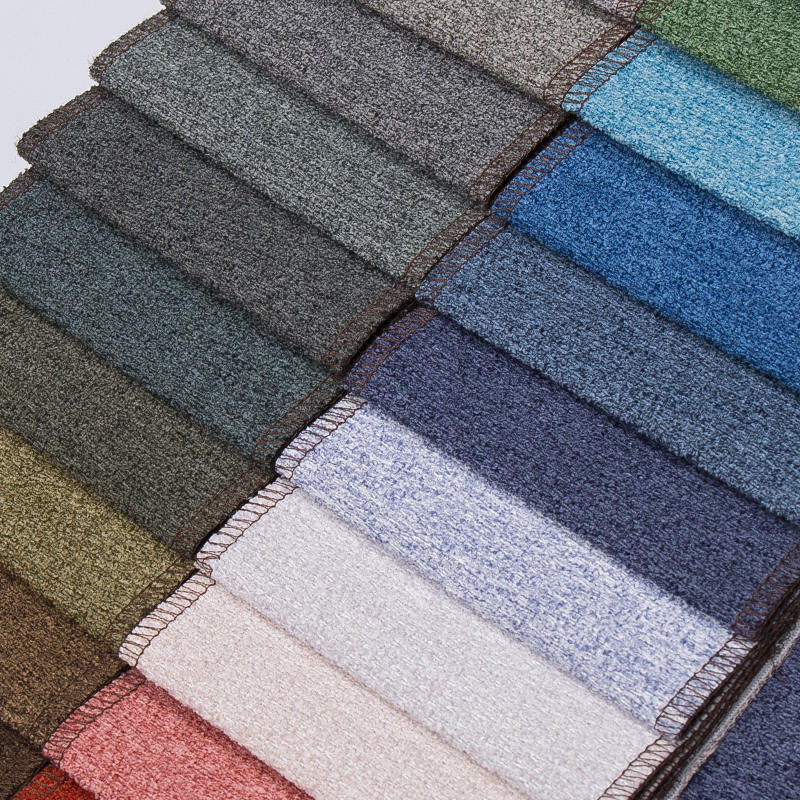 Brushed Sofa Fabric with Soft, Warm SurfaceBrushed upholstery fabric offers a short, soft fluff for sofa use, combining warmth, breathability and durability in custom wholesale supply.View Product →
A bouclé order is only as reliable as the loop specification behind it, so the numbers belong in the purchase order rather than in the product name.
Sample approval is where bouclé projects go wrong. A hand-cut swatch hides loop inconsistency that becomes obvious across a three-meter panel in daylight.
Texture briefs sometimes arrive as soft and cozy rather than looped, and chenille fabric meets that brief through a different yarn structure, with short fibers projecting in every direction instead of a closed loop, which changes the snag and cleaning profile in the buyer's favor.
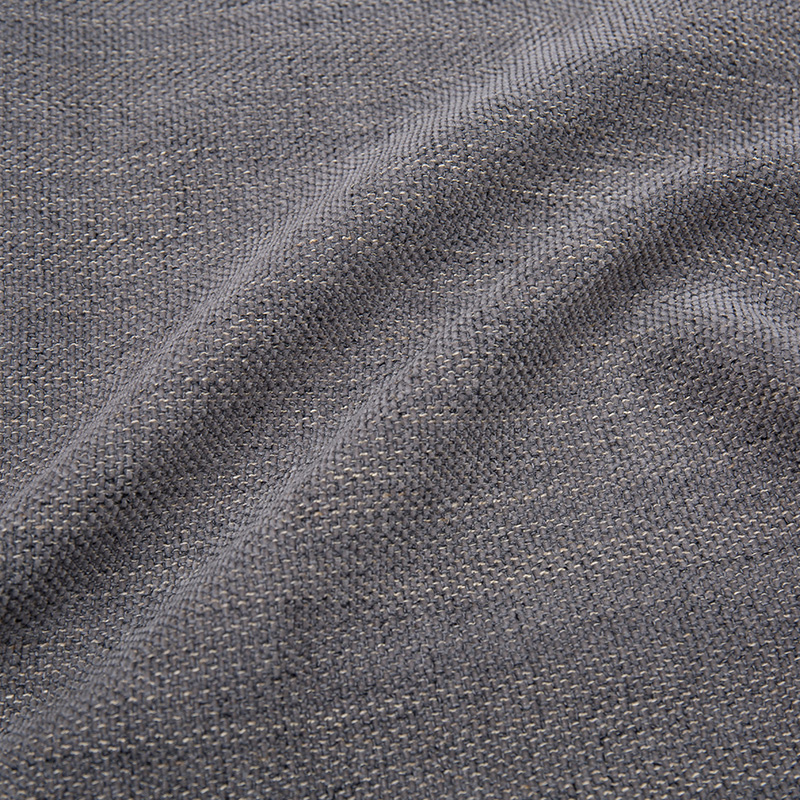 Chenille Sofa Fabric for Upholstery and Home DecorSoft, dense chenille upholstery fabric for sofas, chairs, drapery and decor, available in custom wholesale supply with tightly woven sofa constructions.View Product →
No. Wool and mohair remain the traditional fibers because their crimp holds a springy loop, but polyester, acrylic, cotton, viscose and blends are common in both upholstery and apparel. Performance follows fiber and loop tightness together, so a tight polyester bouclé can outwear a loose wool one in daily seating.
It can, and the loose effect ply is the reason. Short fibers work out of the loop and knot into small balls where arms and legs rub. Longer-staple wool and tightly twisted effect yarns reduce it, while brushing the surface daily only makes it worse.
It is workable when the loop is small and tight and the fabric carries a snag result you have seen. For a sofa used daily by children and pets, a cut pile or a tight flat weave is the lower-risk choice, with bouclé reserved for a chair, headboard or accent piece.
Bouclé is built from loops left uncut on the surface. Chenille is made from a fuzzy yarn whose short fibers project in all directions, giving pile rather than loops. Bouclé is more textured and more snag-prone, while chenille is softer and more uniform in appearance.
Both names describe structure rather than quality. A well-made version of either will beat a poor version of the other on any sofa.
The word travels a long way from the French verb for curling, but the meaning holds: a looped yarn, left looped in the cloth. Judge any bouclé sample by loop height, ply structure and how the surface recovers after you press a thumb into it; those three observations tell you more than the label, the color card or the price tag.
Loop, ply, recovery. Test them in that order and the fabric decision becomes measurable rather than purely aesthetic.

From yarn to fabric. At Xiangyi, we stitch quality into every seam, crafting sofa fabric that goes beyond decor—it embodies your home’s unique style.
PRODUCT

+86-18262539999(Meng Lin)