 English
 中文简体
 عربى
Industry News
Home / News / Industry News / Upholstery Fabric for Dining Chairs: Weave Density, Rub Count and Care Guide
 By Admin
Content
A dining chair is a small piece of furniture with a hard working life. The seat takes a shifting load of 70 to 90 kg several times a day, and every time someone pushes back from the table the covering is dragged across the foam beneath it. That single wear point explains most of the fabric failures we see in trials, and it is why upholstery fabric for dining chairs should be chosen on mechanics rather than on a colour card.
A dining chair fabric has to survive three pressures at once: abrasion at the seat edge, compression over the foam, and liquid spills that arrive within seconds of the plate landing. Colour and hand feel matter, but they are the last things to judge.
The seat edge is the real test. When someone pushes back from the table, the covering is dragged between the foam and the frame, and a band roughly 40 mm deep takes most of that friction. The backrest and outer back of the same chair see a fraction of the load, which is why a fabric can look new for years while the front edge already shows pile loss or shine.
A rub count describes how a fabric behaves on an abrasion machine. It does not describe how the same fabric behaves when it is pulled across a foam edge three times a day for six years.
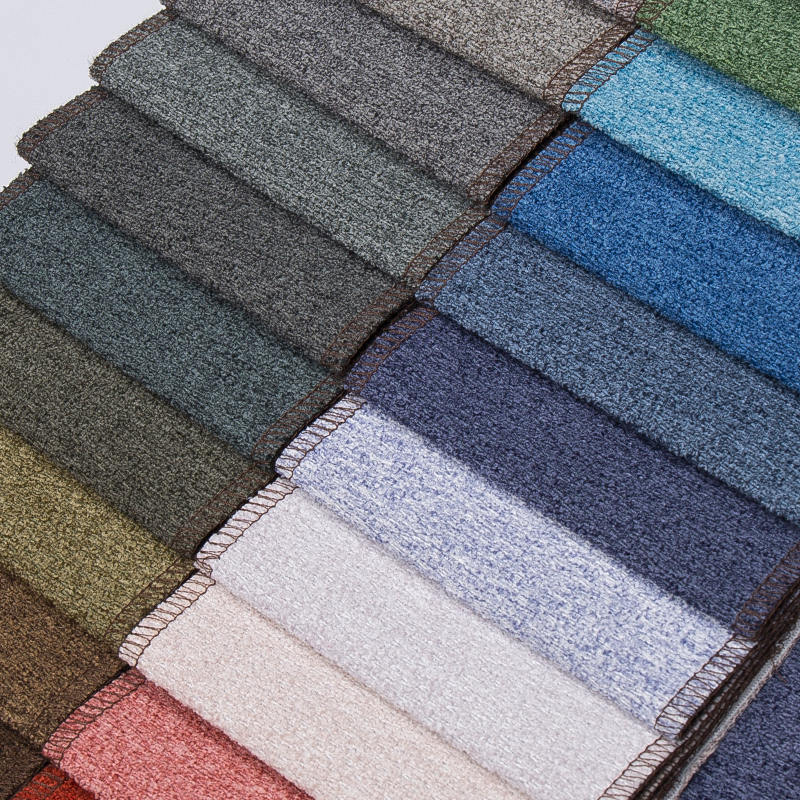
Six woven families cover almost every dining chair brief: polyester imitation linen, brushed fabric, chenille, jacquard, cut pile and masterbatch-dyed wovens. They differ in structure more than in fibre, and structure is what decides how a seat ages.
| Family | Structure | Where it fits | Verify before ordering |
| Polyester imitation linen | Tight plain or twill weave with a dry hand | Everyday family tables and busy dining rooms | Yarn evenness and pilling grade |
| Brushed fabric | Surface brushed or sanded after weaving | Soft-touch hotel and residential dining chairs | Fibre shedding after abrasion |
| Chenille | Chenille yarn with a soft pile face | Formal dining and lighter-traffic settings | Pile crushing and seam bulk |
| Jacquard | Pattern woven on a jacquard loom | Feature chairs and patterned seat backs | Pattern repeat and seam matching |
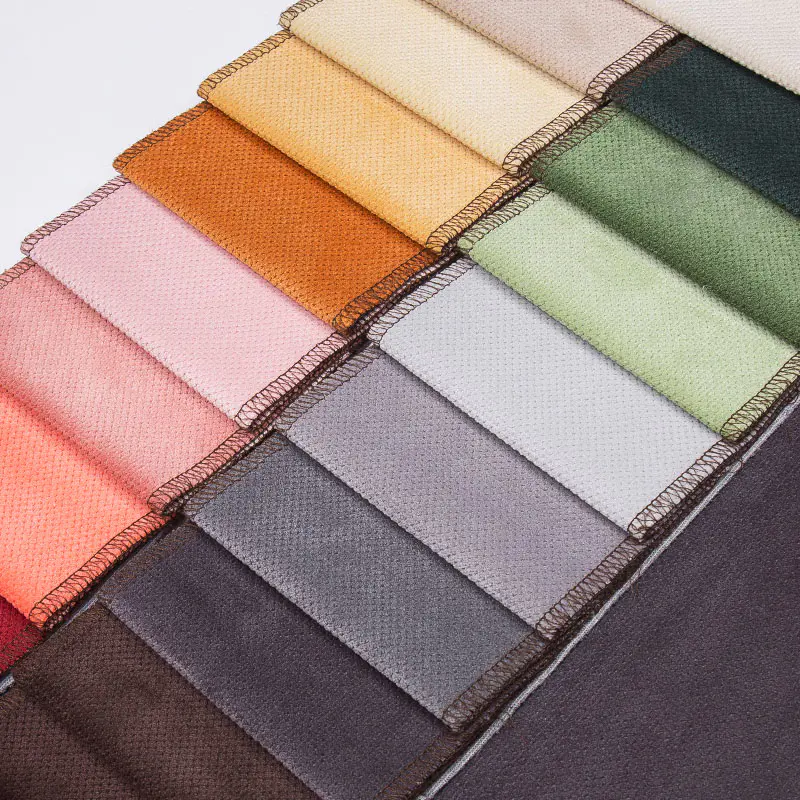
| Cut pile | Cut loops forming a velvet-like face | Statement chairs and occasional dining | Shade direction and pile direction |
| Masterbatch woven | Pigment added to the yarn before weaving | Window-facing chairs and contract seating | Shade uniformity across lots |
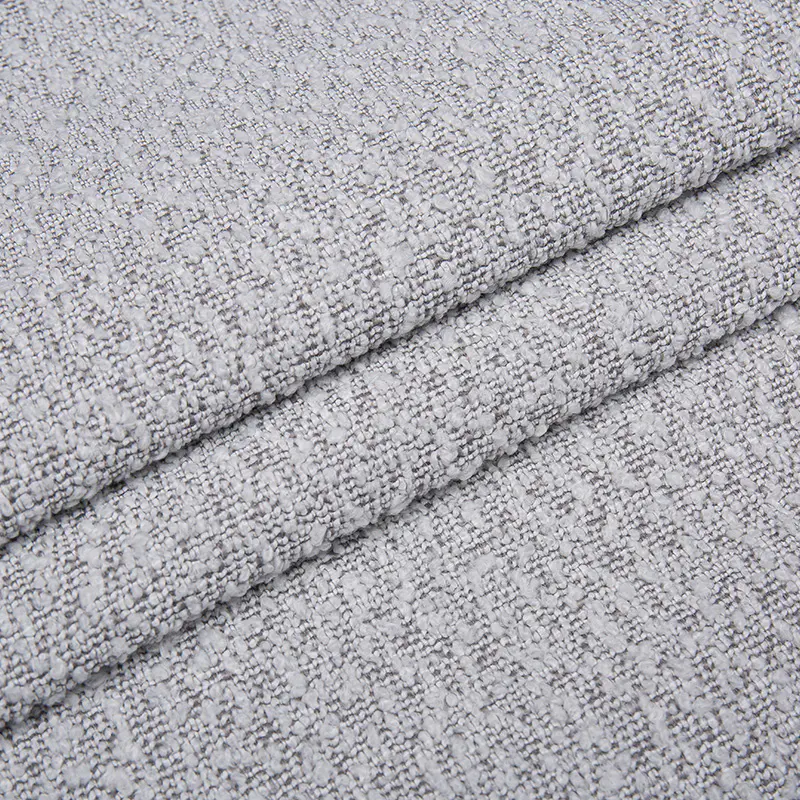
For a table used three times a day, a flat and tightly woven construction is the safest starting point. A polyester imitation linen keeps the dry look of natural linen while holding a denser, more stable grid, which is why it appears so often in restaurant seating.
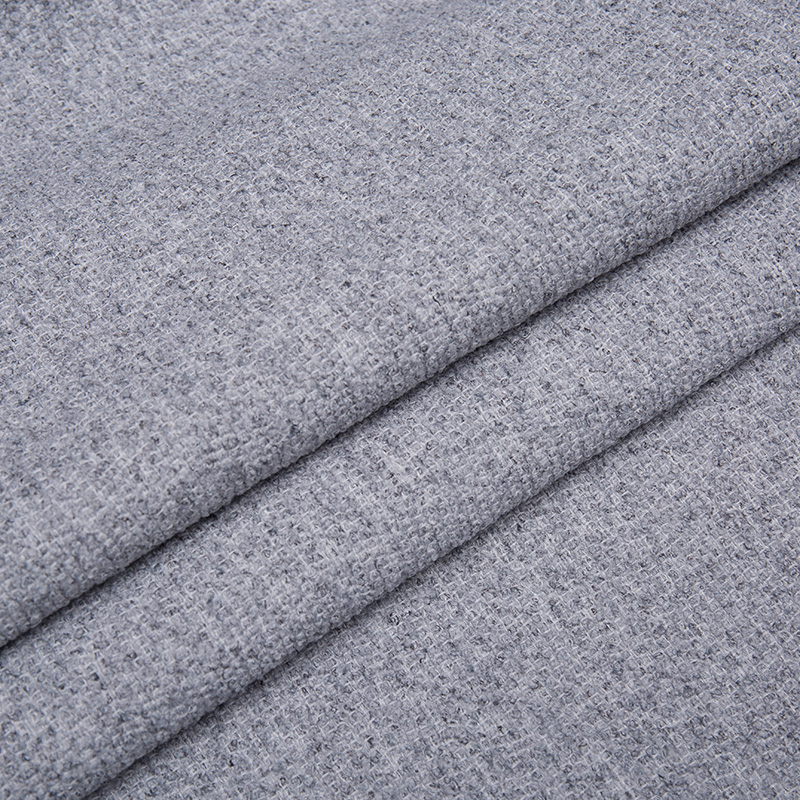 Polyester Imitation Linen Upholstery FabricA tightly woven polyester linen alternative for seats and daily-use settings, offering a dry hand, wrinkle resistance, stain resistance and easy maintenance.View Product →
The fabric that photographs best is rarely the fabric that survives a family table. Ask what the weave does at the seat edge before asking what colour it comes in.
Three numbers on a fabric spec sheet decide most of the outcome: the abrasion rating, the weave density and the seam strength at the seat rail. Everything else is a preference.
None of these checks take long, but they filter a catalogue quickly. We go deeper into the trade-off between wear and comfort in this review of fabric performance and comfort, and the same logic applies to a seat that is only 450 mm wide.
Density beats weight. A heavy loose weave still lets crumbs through, and a mid-weight tight weave often outlasts it by years.
Flat, tight weaves let a spill sit on the surface long enough to be blotted, while pile and loose weaves pull liquid into the structure within seconds. That difference matters more than any marketing claim about stain release.
Check the cleaning code attached to the fabric, usually shown as W for water-based, S for solvent, WS for both and X for vacuum only. A soft chenille seat, for example, looks generous around a formal table but needs solvent care and regular brushing to keep its pile upright.
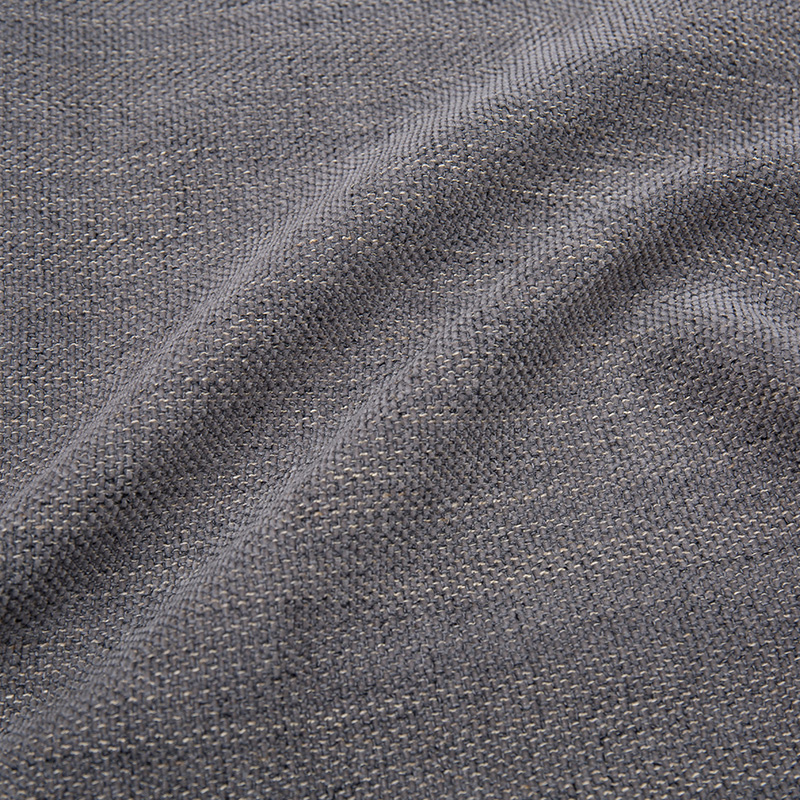 Soft Chenille Sofa Upholstery FabricA soft, dense chenille for sofa upholstery, with a plush high-end look and durable construction suited to custom residential or commercial seating.View Product →
Most marks on dining chairs are not stains. They are a spill that was rubbed into the weave instead of lifted out of it.
Mid-tone patterns hide wear better than flat creams and grey-greens, and solution-dyed yarns hold colour far longer under a window than surface-dyed ones.
A jacquard pattern is woven into the cloth rather than printed onto it, so the design cannot rub away at the seat edge. The trade-off is repeat matching: on a large repeat, six chairs cut from the same bolt can still look mismatched if the panels are aligned carelessly. Masterbatch or solution dyeing pushes pigment into the yarn before weaving, so abrasion exposes coloured fibre rather than a pale core.
 Woven Jacquard Dress and Upholstery FabricWoven-in jacquard patterns resist surface rub and wash wear, making this custom fabric suitable for dresses, upholstery, curtains and coordinated interior projects.View Product →
A printed surface wears from the outside in, while a woven or solution-dyed pattern wears from the inside out, and that is the difference a window seat will show you in two summers.
Order every chair from one dye lot, and compare the bulk against the sample under the light where the chairs will actually sit. Shade shifts that look acceptable in a warehouse are obvious in a dining room with a west-facing window.
Mills that control the process from yarn through finishing can usually hold shade tolerance across repeat orders more tightly than converters who buy greige and send it out. Our own weaving and finishing setup runs spinning, weaving, dyeing and pile finishing inside one group for that reason.
Shade variation between lots is normal. Shade variation inside one order is not, so write the tolerance into the purchase order instead of hoping for it.
For domestic dining chairs, 20,000 Martindale double rubs is a sensible minimum and 25,000 to 30,000 is comfortable. For restaurants, cafes and waiting areas, look for 30,000 and above, and check that the mill quotes every sample using the same test method.
Chenille gives a warm, soft seat but its pile holds crumbs and liquid longer than a flat weave and can crush at the seat edge. It suits formal or occasional dining chairs. For a table used three times a day, pair a dense chenille back with a tighter weave on the seat.
A plain seat and back typically takes 0.8 to 1 metre per chair, so six chairs need roughly 5 to 6 metres. Add 20 to 30 percent when the pattern repeat is above 20 cm, and add more if you want the pattern matched across seat and back.
A fluorochemical or silicone finish slows absorption and helps spills bead up, but it does not replace a tight weave and it fades with cleaning. Test the finish on an offcut, and confirm it survives the cleaning method you plan to use.
Buy the weave first, the colour second and the finish third. A finish improves a good cloth; it cannot rescue a loose one.

From yarn to fabric. At Xiangyi, we stitch quality into every seam, crafting sofa fabric that goes beyond decor—it embodies your home’s unique style.
PRODUCT

+86-18262539999(Meng Lin)