 English
 中文简体
 عربى
Industry News
Home / News / Industry News / Upholstery Definition: The Craft, Materials, and Fabric Specifications
 By Admin
Content
A buyer sends a swatch card reading 100 percent polyester, 320 gsm, linen look. The mill writes back with three questions: what abrasion cycle count are you targeting, what pilling grade do you need, and which cleaning code applies. Nothing on the card was wrong. It simply was not upholstery data.
The gap between how a fabric looks and how it behaves once stapled over foam is where the word upholstery does most of its work. In mills, showrooms and specification sheets it carries two meanings at the same time: the trade of building the soft covered parts of furniture, and the materials that trade installs.
Upholstery carries two dictionary senses, and both of them matter when you read a specification or write one.
To upholster is to build up and then cover: webbing or springs for give, foam for shape, wadding to soften the edges, then the cover, cut, sewn and fastened to the frame. It is a joinery and textile hybrid, judged by hand as much as by eye. Most of the work sits in four stages:
The second sense names the goods themselves: cover fabric, leather, coated vinyl, foam, wadding and webbing. On a purchase order the word usually shrinks to mean the cover fabric alone, which is why a mill and a furniture plant can use it and mean different things.
The word is older than the modern sofa. English records upholstery from the 1640s, built from upholsterer plus the suffix -y. Upholsterer descends from the Middle English upholder, a dealer who kept furniture in repair; the -ster ending came later. The root sits in maintenance rather than decoration, and that still describes the trade.
An upholstered seat is five functional layers above the frame, and each one fails in its own way.
Cut a worn armchair open and the cover is often the least damaged part. Collapse usually starts lower down, in a suspension that has lost tension or a foam that has taken a permanent set. Reading upholstery as a stack makes it easier to specify and easier to fault-find.
| Layer | What it does | What buyers check |
| Frame | Carries load through joints and legs | Joint type, moisture content near 8 to 10 percent |
| Suspension | Spreads weight and returns the seat to shape | Spring gauge, clip count, coil count per seat |
| Foam core | Sets the shape and the sit | Density, indentation load deflection, compression set |
| Wadding | Softens edges and shields the cover from the frame | Fiber type, weight, loft |
| Cover fabric | Takes the wear and carries the look | Abrasion cycles, pilling, lightfastness, seam slippage |
Two numbers in that stack get confused constantly. Foam density is weight per volume; indentation load deflection is softness. A dense soft foam can hold shape for a decade, while a low density soft foam of the same hand feel collapses within a year or two of daily use.
A fabric earns the label upholstery grade when its test data matches the seat it will cover, not when its name sounds heavy.
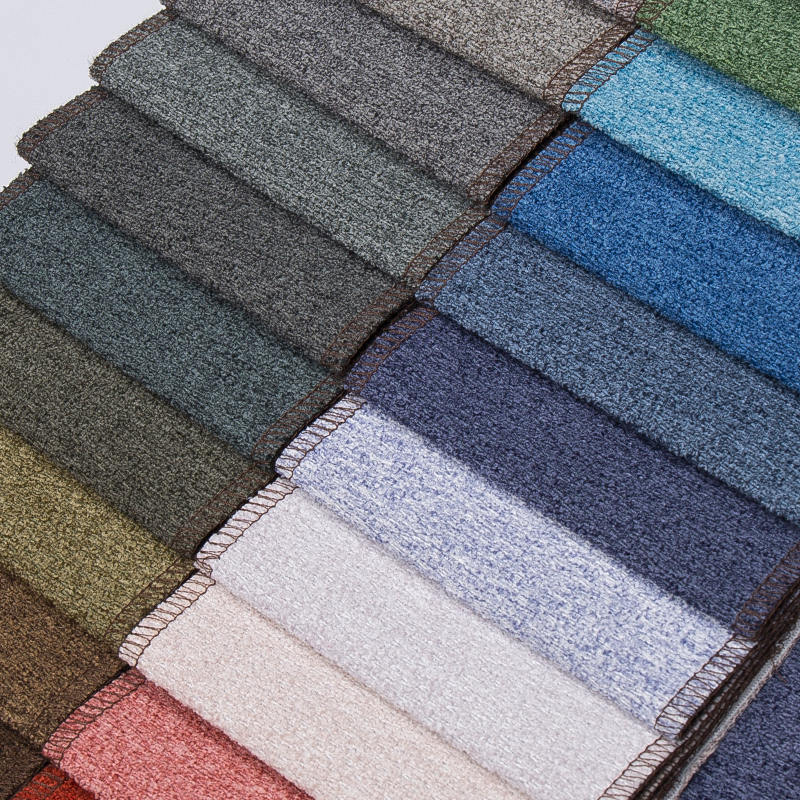
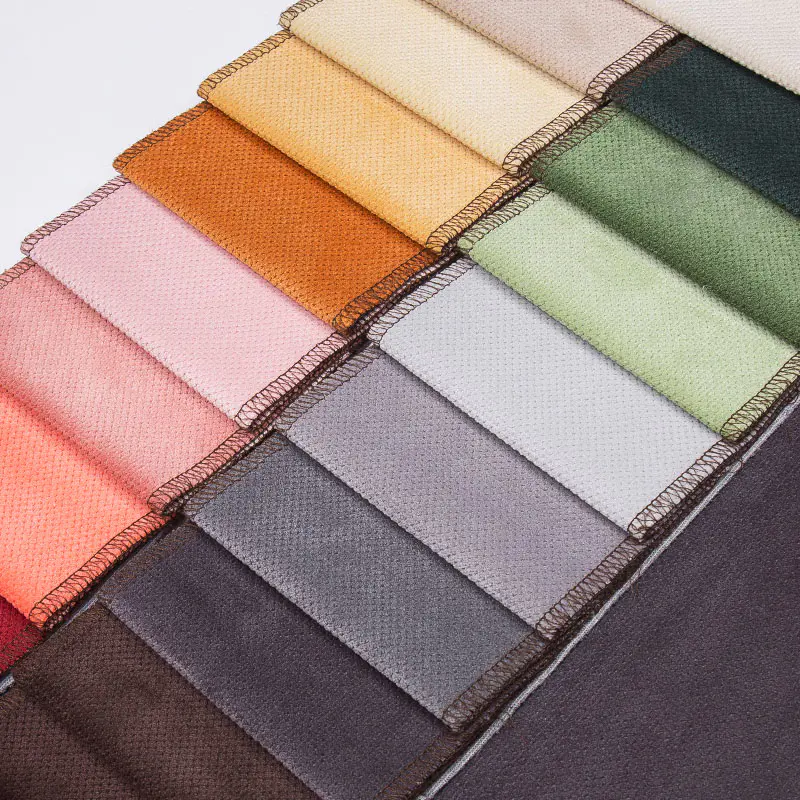
Cover fabrics fall into a few practical families. Flat weaves include polyester imitation linen; pile surfaces such as velvet and cut pile live or die on pile structure and fiber choice; chenille brings a soft yarn character; jacquard weaves the pattern in rather than printing it; brushed surfaces offer a sueded hand; and coated polyurethane or leather covers the wipe-clean end of the market.
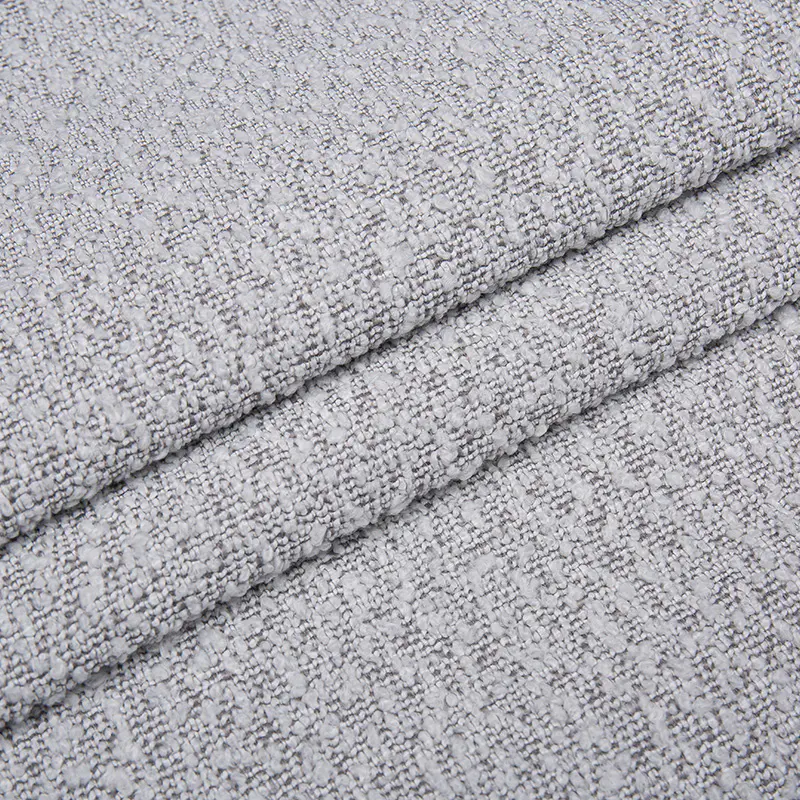
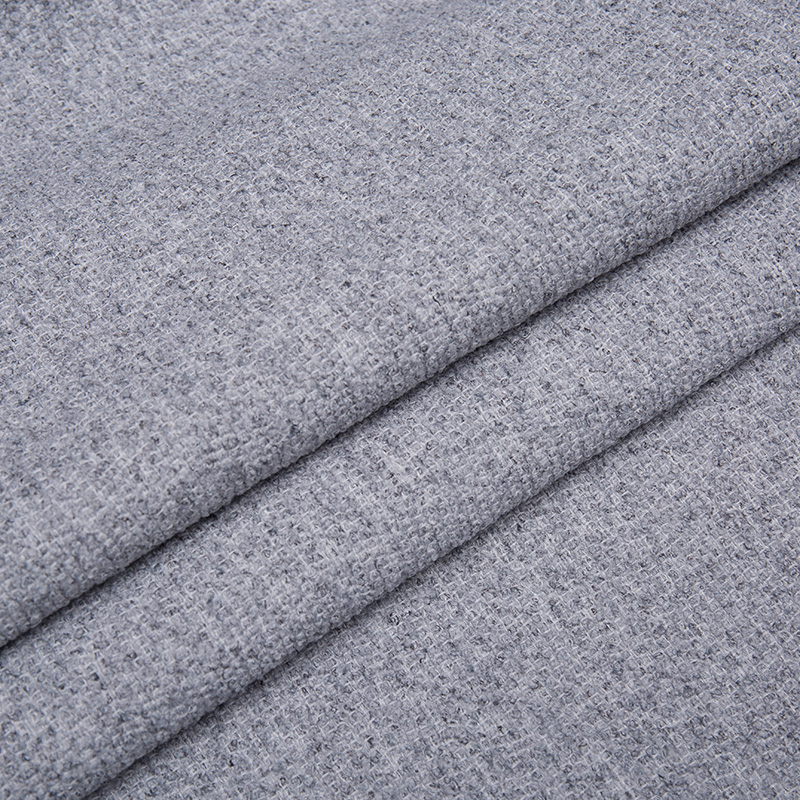 Polyester Imitation Linen Upholstery FabricAll-polyester flat-weave upholstery fabric with a dry hand, positioned for durable, easy-care sofas in high-traffic and humid settings.View Product →
Most specification arguments come back to abrasion, so it helps to know where the thresholds sit:
Martindale figures are a screening tool, not a guarantee, because the test uses a standard abradant rather than the zip on a jacket or the grit on a car seat. Weight alone misleads too: a 500 gsm loose weave with a weak backing can rub through sooner than a tightly sett 320 gsm plain weave, since resistance comes from yarn cohesion and sett as much as from mass.
Upholstery covers anything built to be sat on, leaned against or softened for sound, from dining chairs and headboards to car headliners and wall panels.
Sofas, armchairs, dining seats, bed headboards, ottomans. A 20,000 to 30,000 Martindale target covers most of it.
Hotels, offices, waiting rooms, restaurants, auditoriums. Abrasion targets usually double, and fire performance and cleanability join the brief.
Automotive seats, door cards, marine cushions, bus and rail seating. Lightfastness and humidity resistance matter more than domestic softness.
Contract work changes the material logic, not just the colour card. A hotel chair may be recovered three times before the frame is replaced, so the cover is chosen for cleaning cycles first and hand feel second. Healthcare seating often moves to coated fabric for wipe-down disinfection, accepting a cooler hand and less breathability in exchange. Where softness leads, chenille yarns are common because a plush pile hides wear marks along the arms.
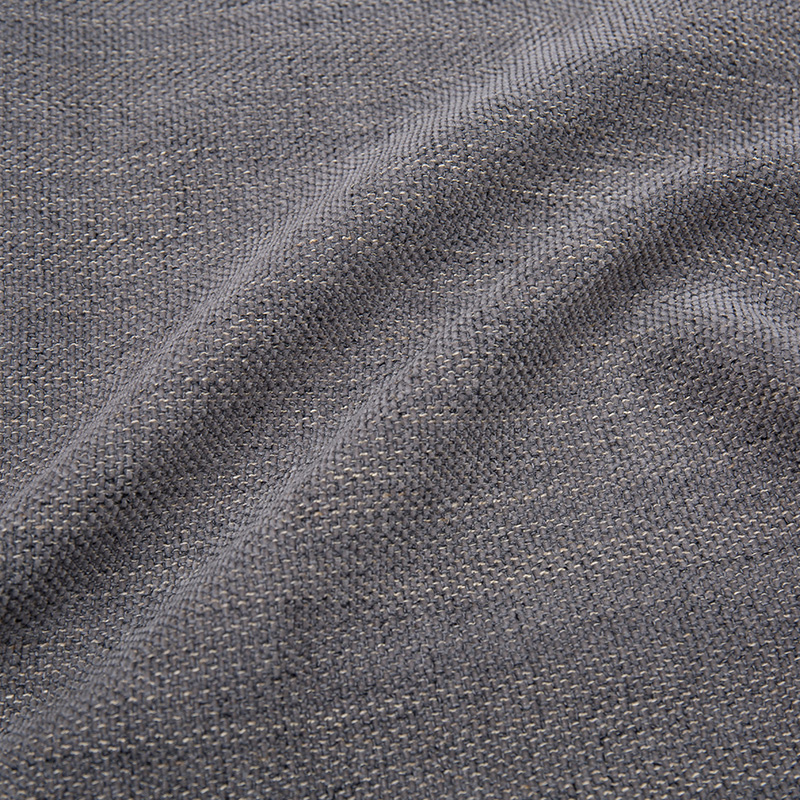 Performance Chenille Sofa Upholstery FabricDense, plush chenille upholstery with a soft hand and durability, suited to contract seating where pile helps conceal wear along arms.View Product →
Specify an upholstery fabric by end use first, then test data, then backing and repeat direction. Appearance comes last, or the first three get argued away.
Where the supply chain sits matters as much as the report. A mill that controls yarn, weaving and finishing can hold a dye lot across a repeat order; a trader sourcing from three plants cannot. It is fair to ask how much of that chain the supplier owns before committing to a twelve month programme, because the answer shapes lead time, shade consistency and who absorbs the cost when a roll fails inspection.
Jacquard constructions deserve their own sample round. The pattern is woven in rather than printed, and a repeat that looks clean on paper can drift at the seam once panels are cut and matched.
 Woven Jacquard Dress and Upholstery FabricCustom jacquard fabric with patterns woven into the structure, offering soft texture and dimensional effects for dresses, garments, and upholstery sampling.View Product →
These four questions come up most often when buyers, designers and students look up the definition of upholstery.
No. Upholstery is the trade of padding and covering furniture plus the finished material set around it; fabric is one input, alongside foam, wadding, springs and findings.
A dining chair seat built with a plywood frame, elastic webbing, a 30 mm foam pad, a wadding wrap and a stapled polyester cover is upholstery in both senses of the word.
Covers are usually polyester, cotton, linen blends, wool, chenille yarns, leather or coated polyurethane. The structure beneath uses foam, wadding, springs, webbing and hardwood or plywood frames.
Reupholstery replaces the cover and usually the padding on an existing frame. Frame and suspension are inspected, repaired and reused, which is why a serious reupholstery quote starts with a teardown.

From yarn to fabric. At Xiangyi, we stitch quality into every seam, crafting sofa fabric that goes beyond decor—it embodies your home’s unique style.
PRODUCT

+86-18262539999(Meng Lin)