 English
 中文简体
 عربى
Industry News
Home / News / Industry News / Performance Fabric Explained: Tests, Constructions and Sourcing Checks
 By Admin
Content
Three mills, three definitions. Ask one supplier what makes a fabric a performance fabric and you will hear about a stain-repellent finish; ask the next and you get a 50,000 double-rub abrasion figure; ask a third and the answer is solution-dyed yarn that holds colour through 300 hours of light exposure. All three answers are accurate, and none of them can be compared with the other two.
That is the practical problem behind the phrase. The word printed on a sample card tells you nothing you can test; the specification sheet behind it tells you everything, provided you know which numbers to read. What follows covers what the term actually includes, how the main sofa constructions behave under real use, and which checks to run before a bulk order leaves the mill.
Performance fabric is upholstery whose resistance to stains, abrasion and fading is built into the fiber, the yarn structure or the finish, rather than left to the natural behaviour of an untreated cloth.
A working definition: a performance fabric is a woven or knitted textile that declares a measured threshold for at least one of abrasion resistance, stain and liquid repellency, colourfastness to light, or pilling, and that threshold is stated on the specification rather than only on the sample tag.
The term is not regulated and no single industry standard sits behind it, which is why two mills can both sell performance fabric at very different levels of durability. What separates a real claim from a marketing one is that the claim names the test, the result and the standard.
A credible specification, in practice, carries four things:
When a seller can supply all four, you are buying a specification. When they can supply only the first line of the sample tag, you are buying a word.
Four tests carry most of the weight in upholstery specifications: abrasion, pilling, colourfastness to light, and stain or liquid repellency. Everything else on the sheet is supporting data.
| Test | What it measures | Typical specification |
| Martindale abrasion | Rubbing cycles completed before two threads break | 15,000 light residential, 30,000 and above heavy residential |
| Wyzenbeek abrasion | Back and forth rubs against a wire screen | Reported separately; not comparable with Martindale figures |
| Pilling, ISO 12945-2 | Fuzz and pills forming on the surface | Grade 4 or better after 2,000 rubs |
| Colourfastness to light | Fading under controlled light exposure | Grade 4 or better, with exposure hours declared |
| Seam slippage | How far a seam opens under a set load | Under 6 mm at the agreed force |
| Stain repellency | Beading and absorption time for oil and water | Both oil and water grades reported, not one |
Two cautions matter when you read these numbers. First, abrasion results are not transferable between methods: a Martindale figure and a Wyzenbeek figure measure different motions and cannot be ranked against each other. Second, ask who ran the test and on which sample. A result from a mill laboratory on a hand-woven swatch is useful during development and weak as a purchasing document; a report on a production lot is what you can hold a supplier to.
It is also worth asking for the lower of two abrasion results, not the higher. Mills commonly quote the best run, and the spread between best and worst tells you more about consistency than the headline figure does.
Performance comes from three places, and most commercial upholstery uses at least two of them at once.
Solution-dyed polyester carries colour inside the filament, so fading and crocking stay low even after repeated cleaning. Olefin and acrylic resist moisture and UV; wool resists soiling naturally. Untreated cotton and linen sit at the other end of the scale.
A dense plain weave and a 450 gsm chenille behave nothing alike, even in the same fibre. Pile density, crimp and weave tightness decide how a cloth handles friction long before any finish is applied to it.
Fluorocarbon or fluorine-free repellents, anti-pilling shearing, knitted backings and laminations. This is where cost moves fastest, and where an inexpensive fabric usually becomes inexpensive in the first place.
Because the three routes interact, yarn, weaving and finishing are hard to separate in practice. A group that spins its own yarn and finishes its own cloth can hold shade and shrinkage tolerances that a fabric trader buying on the open market cannot, which is one reason experienced buyers ask where the yarn comes from and not only where the fabric is woven. Our own group structure is described on the about page.
The right construction depends less on the label than on who sits on the sofa and for how long.
Chenille is the clearest example. The short, dense pile gives a soft hand and deep colour, and a polyester chenille can pass 30,000 Martindale cycles without any backing at all. The weakness is compression: pile flattens on seat cushions and along arm edges, so appearance changes well before the abrasion result fails. For a family sofa in daily use, specify a chenille with higher pile density and confirm how the mill sets the pile after finishing.
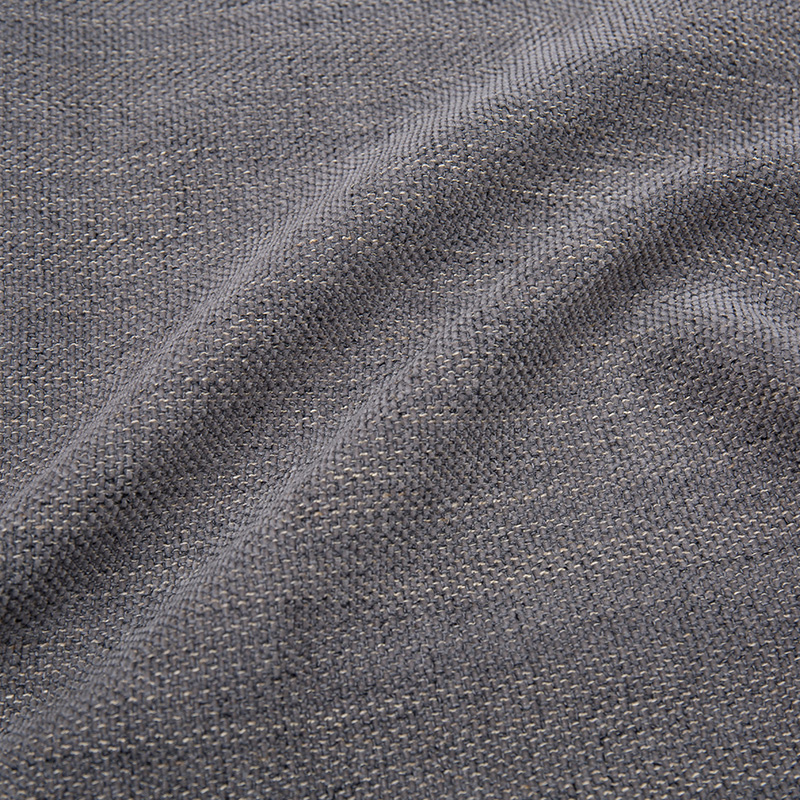 Wholesale Chenille Sofa Fabric with Dense Soft PileSoft, dense chenille upholstery with good breathability and durability; for daily-use sofas, confirm pile density and finishing to limit compression.View Product →
Cut pile behaves differently again, a velvet-like surface where crush marks belong to the look rather than counting as a defect. Buyers who reject a cut pile after six months are usually rejecting pile density, not the construction itself. For contract seating and busy family rooms, a tight plain weave or a compact jacquard will hold its appearance longer at the same abrasion figure.
A fabric that passes 30,000 cycles on a test frame can still show wear within a year on a fixed seat, because a fixed seat takes the same load in the same place every day. Ask for data that reflects the application, not just the roll.
A performance fabric lowers the cost of cleaning. It does not remove the need to clean.
Most stain repellents are topical: they sit on the fibre surface and wear away with abrasion and repeated washing, so the repellency you test in year one is not the repellency in year five. Fibre-integrated performance, such as solution dyeing, olefin or tightly woven polyester, does not wash out, which is why the two are rarely priced the same.
Care instructions belong in the supply contract, not only on the website. Specify whether the cloth tolerates water-based extraction or needs solvent cleaning, how the pile should be brushed after cleaning, and whether the repellent can be re-applied in the field.
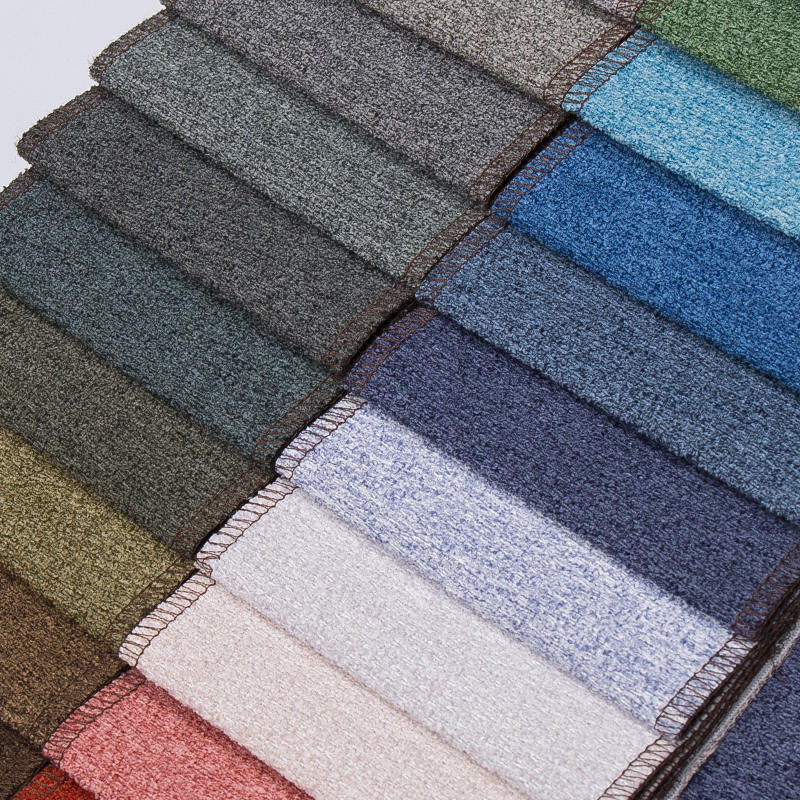 Brushed Sofa Upholstery Fabric for Wholesale and Custom SoftnessSoft brushed upholstery with warm fluff, breathability and low shedding after treatment; review cleaning and testing terms before specifying.View Product →
The comparison only holds when both fabrics are tested to the same method. Comparing a Martindale performance fabric with a Wyzenbeek standard cloth produces a number nobody can defend in a meeting.
Five checks separate a fabric that performs from one that only claims to.
It is worth it when the duty cycle justifies it. If a standard upholstery shows visible wear in three years and a specified performance fabric holds for eight, the higher cost per metre is usually cheaper than re-covering the sofa. For a spare-room chair used a few times a month, the premium buys very little.
It used to. Early stain-repellent finishes left a slick, slightly plastic hand. Modern solution-dyed polyester chenille and brushed fabrics close most of that gap, though a heavy repellent loading still firms up the surface. Judge hand on a production sample rather than a lab swatch.
Topical repellents fade with abrasion and cleaning, typically over a few years of daily use depending on how often the piece is cleaned. Fibre-integrated performance does not wear off because it is part of the yarn. Ask which type you are buying before you promise a client that the sofa will wipe clean.
Sometimes. Mono-material polyester without a laminated backing is the easiest to recycle; blends, polyurethane backings and heavy topical finishes complicate the waste stream. If end-of-life matters to your programme, specify the fibre and the backing at the development stage, not after the fabric has been approved.

From yarn to fabric. At Xiangyi, we stitch quality into every seam, crafting sofa fabric that goes beyond decor—it embodies your home’s unique style.
PRODUCT

+86-18262539999(Meng Lin)